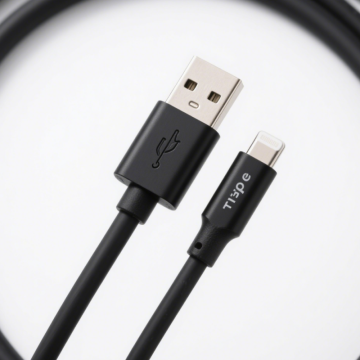
USB 2.0
(Total 1 Products)
-
Brand:szxyq
Min. Order:1 Piece/Pieces
Model No:USB 2.0
Transportation:Ocean,Land,Air,Express
Packaging:boxes
Supply Ability:1 million per month
Place of Origin:China
Productivity:1 million per month
This USB 2.0 data cable uses high-quality tinned copper or bare copper conductors, combined with various insulation materials such as SR-PVC, PP, PE, FR-PP, and TPEE, and the RoHS compliant cable can be flexibly customized to meet different...
A popular option for connecting a variety of peripheral devices to computers is
USB 2.0, a widely used universal serial bus standard. Although newer standards like USB 3.0 and beyond surpass its theoretical maximum transfer speed of 480 Mbps (High-Speed mode), its speed is more than adequate and reasonably priced for connecting keyboards, mice, printers, game controllers, and numerous consumer electronics. Strong compatibility is a feature of the standard, and its Type-A connector—the most popular and identifiable port shape in recent decades—ensures smooth connectivity with a wide installed base of current hosts and devices.
The USB 2.0 standard is modified for both the contemporary mainstream Type-C interface and older portable device connectors like Micro-USB and Mini-USB,B in addition to the traditional legacy Type-A interface. As a result, USB 2.0 cables with a Type-A connector on one end and a Micro-USB or Type-C on the other are frequently found. These cables are mainly used for medium-to-low-speed data synchronization and charging smartphones, tablets, and other portable devices. Although it is no longer at the forefront of pure data transfer performance, USB 2.0 is still essential for connecting low- to medium-speed peripherals and delivering dependable power. Because of its incredibly low cost and proven dependability, it satisfies the market's need for basic functionality and economy.
We travel to the ends of the earth in search of theworld's finest fibres. Once home with us in italy.we transform them in sublime garments throughtime-honoured manufacturing techniques
Automotive Wiring Harness are high-quality cables, reliable wiring solutions, Usb-C Connectors Video conferencing systems involve multiple audio and video streams and control streams, and the transmission distance generally exceeds 5 metres.Typical application scenariosVideo conferencing systems: 5–15-metre extended transmission, ensuring synchronised audio and video Medical device connections: Ultrasound equipment, monitor data transmission Industrial control systems: PLC, human-machine interface device connections Professional audio equipment: Mixing consoles, effects processors digital connections Security surveillance systems: Remote control keyboards, DVR connections
Conductors used: Single or stranded tinned copper, bare copper, optional.Common insulation materials: SR-PVC, PP, PE, FR-PP, FR-PE, TPEE Braided mesh, metal foil, or equivalent performance materials Sheath material: TPE, PVC Wire structure: 1 twisted pair (28 AWG) + 2 power wires (28 AWG) + ground wire + aluminium foil + braided/wrapped + outer sheath
1. Stable high-speed data transmission2. Professional-grade electromagnetic shielding3. High-reliability power transmission4. Durable mechanical performance 5. Environmental and safety certifications6. Convenient user experience

Q1: What is the maximum stable transmission distance supported by this USB extension cable?
A: In a standard office environment, it can stably support transmission distances of 5-15 metres.
Q2: Why is a double-layer shielding design necessary?
Aluminium foil layer: Effectively shields high-frequency electromagnetic interference (such as Wi-Fi signals)
Woven mesh: Defends against low-frequency interference and physical damage
Q3: What are the advantages of tin-plated copper conductors?
A: Stronger antioxidant properties, extending service life.Better welding performance, more reliable connections.Better corrosion resistance, suitable for humid environments.
Q4: Which operating systems are supported?
A: Fully compatible with:
Windows XP/7/8/10/11
macOS 10.6 and above
Linux Kernel 2.6 and above
Android (OTG support required)